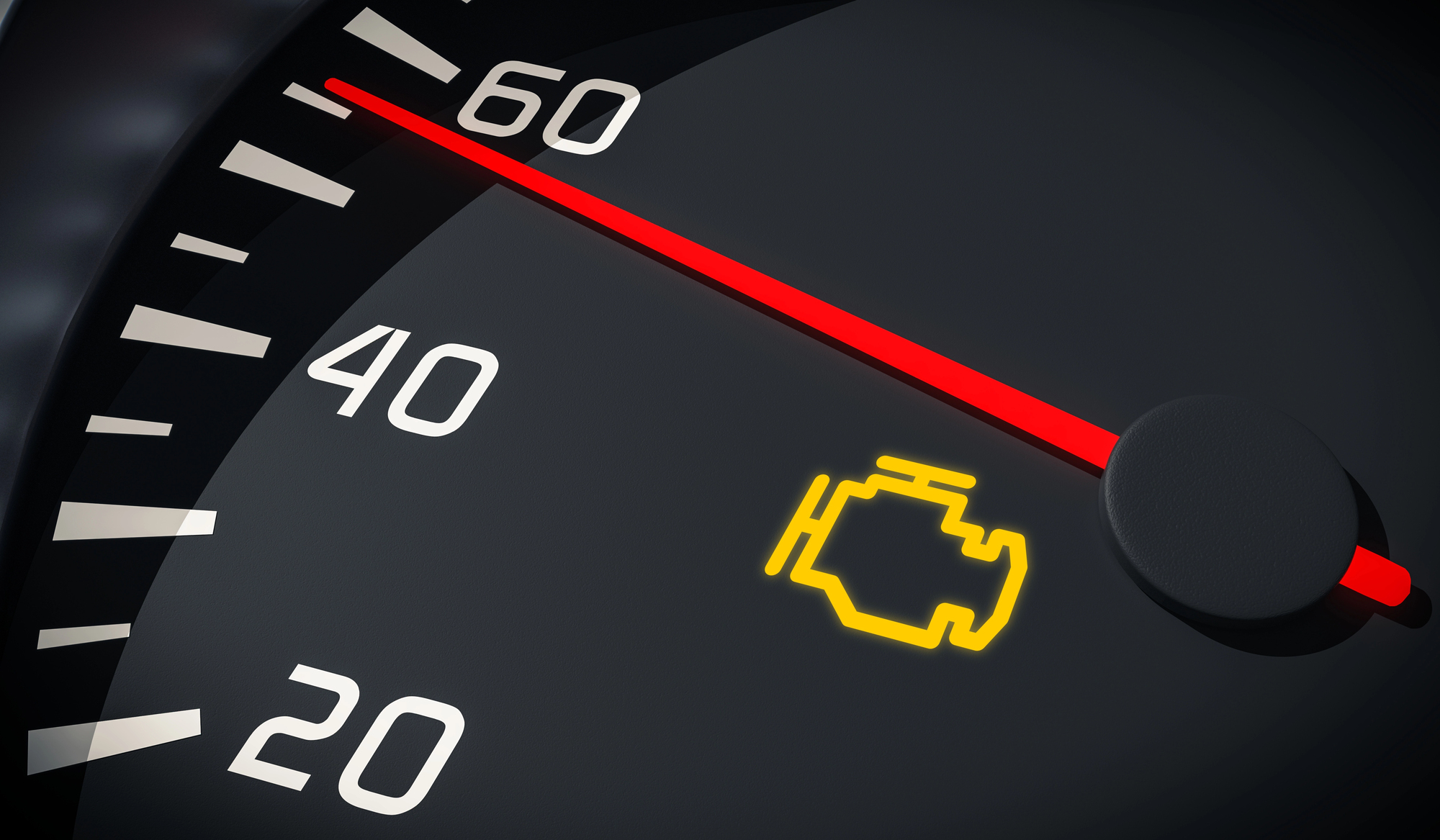
A check engine light is the only warning on your dashboard that can mean a loose gas cap or a failing catalytic converter, and it looks identical either way. The light tells you the computer stored a fault. It does not tell you which fault, how serious it is, or what it will cost to fix.
There is one thing you can read from the dashboard alone, though, and it changes what you should do in the next ten minutes.
Solid Light or Flashing Light? Start There
A solid light means the computer logged a fault and wants it looked at. The vehicle is usually drivable. You have days, not months, but you are not in an emergency. Booking a car diagnostic test in Ames inside that window is usually the difference between replacing a sensor and replacing a converter.
A flashing light means something else entirely. It almost always signals an active engine misfire, which sends unburned fuel straight into the exhaust. A catalytic converter operates well above 1,000 degrees Fahrenheit, and raw fuel reaching it at that temperature melts the internal honeycomb. That turns a coil and spark plug repair into a converter replacement.
If your light is flashing, pull over when it is safe, shut the engine off, and have the vehicle towed rather than driving it in.
The Two Checks Worth Doing Before You Call
First, the gas cap. Remove it, check the rubber seal for cracks or stiffness, and thread it back on until it clicks. A cap that is not sealing lets the evaporative emissions system fail its leak test, and that alone sets the light. If the cap was the problem, the light may clear on its own after several drive cycles.
Second, note what changed. Rough idle, hesitation under acceleration, a fuel smell, harder starting, or a noticeable drop in fuel economy all narrow the field considerably. Write down what you noticed and when it started.
That is where the useful at-home checking ends. There is no safe way to narrow a fault code further from the driver’s seat, and guessing at parts is expensive.
Why the Light Gets Ignored Longer in Iowa
Iowa runs no periodic safety inspection and no emissions testing on passenger vehicles. Nothing in the registration process forces the issue, so a driver here can carry a check engine light for a year without anyone stopping them.
The trouble is that most faults behind that light get worse and more expensive the longer they run. A lean condition, code P0171, often starts as a cracked intake hose or a dirty mass airflow sensor. Left alone, it washes fuel past the rings and turns into engine repair that was avoidable six months earlier. An oxygen sensor that is slow to respond quietly costs fuel economy before it finally throws a catalyst efficiency code, P0420, at which point the converter is often already damaged.
Cold weather adds a second pattern. The evaporative system checks the fuel tank for leaks by pulling a vacuum, and gas cap seals and rubber lines stiffen as temperatures drop. The first hard freeze of the season is a common trigger for evap codes such as P0442 and P0455 on vehicles that ran fine through September.
What a Check Engine Light Diagnostic Test Actually Tells You
A fault code names a circuit, not a part. P0171 says the engine is running lean on bank one. It does not say whether the cause is a vacuum leak, a contaminated mass airflow sensor, a weak fuel pump, or a leaking injector. Replacing parts in code order is how people end up paying twice.
The scan is only the starting point. What follows is live sensor data, the freeze frame captured at the moment the fault stored, fuel trim readings under load, and physical testing such as smoke testing the intake for vacuum leaks or checking coil and injector output. That work takes roughly one to two hours at Ron’s depending on the vehicle, and the diagnostic fee is discounted against the bill once you approve the repair.
Lights People Mix Up With the Check Engine Light
Three other dashboard warnings get mistaken for it, and each points at a different system.
The ABS light, usually the letters ABS inside a circle, means the anti-lock function is disabled. Your brakes still work mechanically, but you lose anti-lock control on ice, which matters more here than most places. It is worth knowing the brake repair warning signs that show up alongside it.
The TPMS light, shaped like a horseshoe with an exclamation point inside, is tire pressure. It fires often in the first cold week of autumn because air contracts. Check pressures against the door jamb sticker before assuming a leak.
The battery-shaped light is a charging system warning. It points at the alternator, belt, or wiring far more often than the battery itself, which is why car electrical problems get misdiagnosed as a dead battery so consistently.
Frequently Asked Questions
Will the check engine light turn itself off?
Sometimes. If the fault was intermittent and the condition does not repeat, the computer clears the light after about three consecutive drive cycles without it. The code stays in memory as a history code, which is why scanning after the light goes out is still worthwhile. A light that clears and comes back is not a solved problem.
How long does a car diagnostic test take?
About one to two hours, depending on the vehicle and how far the fault has to be traced. The diagnostic fee is discounted toward the repair when you approve the work.
Is a free code scan at a parts store the same as a diagnostic test?
No. A counter scan pulls the stored code and stops. It does not include live data, freeze frame, fuel trim under load, or any physical testing, and that testing is where the actual cause gets identified. A free scan is a useful first data point, not a diagnosis.
An unexplained warning light costs a technician some focused time now or a tow later. Ron’s Auto Repair Center has serviced European, domestic, and Asian vehicles in Ames since 1982, with ASE-certified technicians and NAPA Gold AutoCare certification behind the work.
Call (515) 232-8555 to book a check engine light diagnosis.